
Today in History
The public archive
Documentaries commissioned by curious people, shared for everyone.
Episodes people made — listen, like, and save the good ones. · 12 episodes · 71 listens · 2 new this week

Editor's pick
Before it was a book, the Odyssey was breath, memory, and a lyre in a smoky hall. Behind its monsters hide a lost Bronze Age, four dark centuries, and one brand-new invention that froze a living song forever.
Summoned by curiosity: “Tell me the real history of the Odyssey”
Today in History

by @yev · 15 min · Sep 12
Twenty thousand years ago walls of ice buried half the northern world, then astronomy and a violent thaw remade everything. What if the world we farm, map and live in was handed to us by the way the ice chose to melt?
“How the ice age started and ended on earth and what is the impact ?”

by @yev · 5 min · Sep 9
The Red Army crushed Nazi Germany using a battle doctrine invented by a man Stalin had already had shot as a traitor. To win, Soviet generals had to quietly resurrect the ideas of a ghost they weren't allowed to name.
“How did Marshal Mikhail Tukhachevsky strategy help win the WW2”

by @wolfscairn-llc · 10 min · Aug 2
Why does Japanese still use Chinese characters alongside two homegrown syllabaries? The answer begins with Buddhist texts and court politics, then winds through women’s literature, schoolroom reform, and the surprising survival of an apparently impossible system.
“The development of Japanese writing systems”

by @yev · 10 min · Aug 1
Three hundred thousand years, one species, and a straight line you can actually follow — from an ochre handprint to a phone in your pocket. What turned a scattered band of African foragers into a planet-spanning civilization?
“Give me the best summary of human civilization from oldest sapiens to now”

by @wolfscairn-llc · 10 min · Jul 31
A peasant in fourteenth-century England could lose grain, labor, rent, and church dues before ever seeing a coin—yet the modern American tax bill may still be larger. The answer depends on whether “tax” means money paid to government, or everything extracted from a household’s survival.
“Who was taxed more - Medieval peasants or modern Americans?”
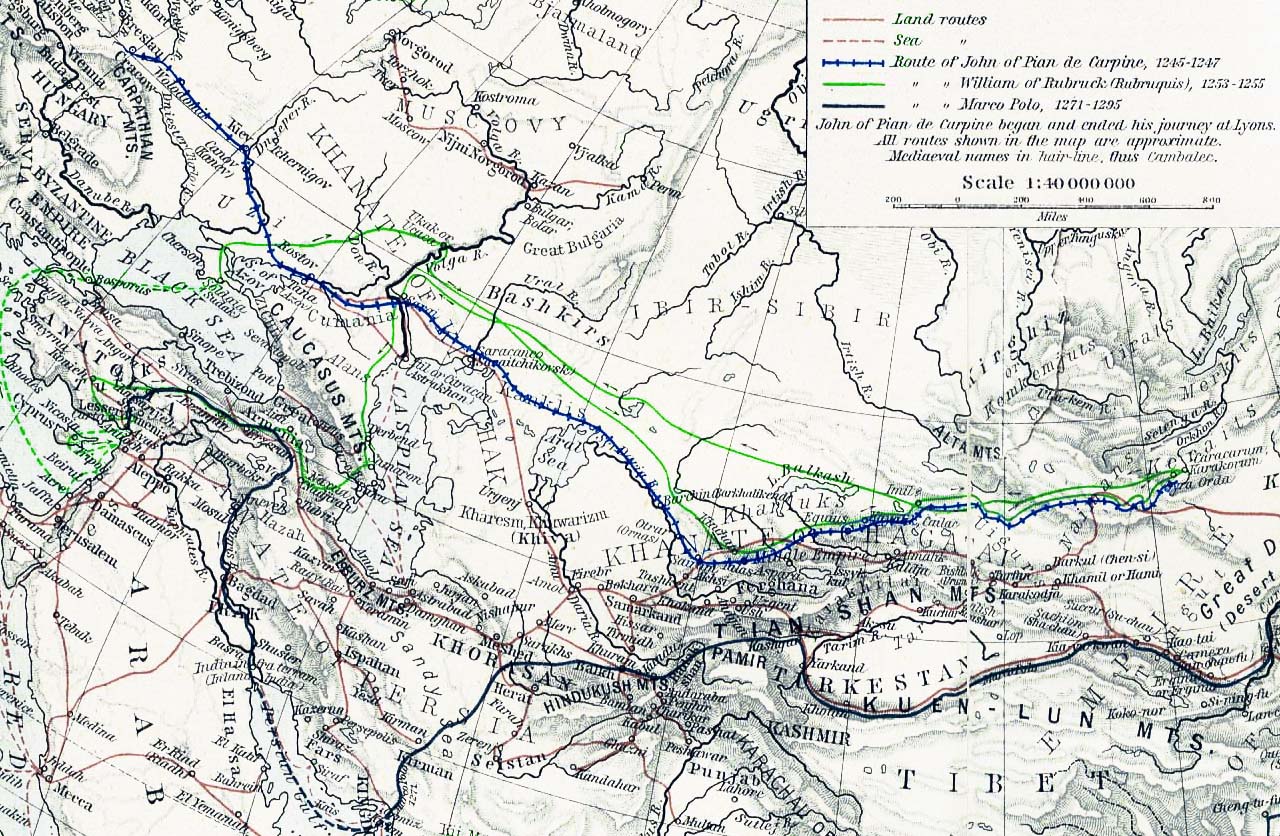
by @muhammed-batuhan-ayd · 10 min · Jul 30
A friar crosses half the known world carrying a pope’s warning to the Mongol emperor—and returns with a reply that demands Europe’s submission. At the papal court, one letter becomes a test of whether Rome understands the power approaching from the east.
“Pope IV, who discussed Güyük Khan's letter with his advisor. Innocent”


by @yev · 20 min · Jul 11
From a cluster of Iron Age huts on the Palatine to a Mediterranean superpower and its long unraveling, this is the story of Rome told through its people, its engineering, and its everyday life. Two hosts trace roughly a thousand years of kings, republic, and empire—separating cherished legend from what the spade and the sources actually reveal.
“Tell me about the history of rome”


by @arto-kantonen · 10 min · Aug 6
In less than an hour, a modern passenger ferry became one of Europe’s deadliest peacetime disasters. The sinking of the Estonia still raises questions about design, rescue, and why new evidence ultimately strengthened rather than overturned the original explanation.
“Estonia ship sinking”

by @wolfscairn-llc · 10 min · Jul 31
What happens when courts, police, money, and even citizenship become things people can buy? Anarcho-capitalist thought produced stranger consequences than a stateless society: private-law experiments, encrypted communication, cryptocurrency, and a recurring problem its champions never quite solved.
“Interesting consequences of anarcho-capitalist thought”