Historai · shared episode
The Khan’s Letter Reaches Rome
A friar crosses half the known world carrying a pope’s warning to the Mongol emperor—and returns with a reply that demands Europe’s submission. At the papal court, one letter becomes a test of whether Rome understands the power approaching from the east.
c. 1245 CE
The Friar Sets Out
- ▪Spring 1245: Carpini rides east from the papal court
- ▪Mongols had devastated Rus, Poland, and Hungary
- ▪An aging, experienced Franciscan chosen for endurance
Transcript
Ada:Spring, twelve forty-five. A heavyset Franciscan in his sixties climbs onto a horse outside the papal court, carrying letters meant for the most feared man alive. He is riding east, toward the empire that had just crushed Poland and Hungary.
Theo:East? Toward the Mongols? People were fleeing that direction, not heading into it.
Ada:Exactly. I'm Ada. This is Historai, and today we follow Friar John of Plano Carpini across half the known world—and the reply he brings back that no one in Rome was ready to read.
Theo:I'm Theo. So set the scene—how frightening were the Mongols in twelve forty-five?
Ada:Terrifying. In the previous few years their armies had shattered the Rus principalities, then poured into Poland and Hungary, wiping out European knights who badly underestimated them.
Theo:And then they just... stopped. Why?
Ada:The Great Khan died in twelve forty-one, and the commanders turned back east for the succession. Europe called it deliverance. But no one knew if the horsemen would return next spring.
Theo:So why gamble a lone friar against the empire that had beaten every army it met?

1245 CE
The Letter from Lyon
- ▪Innocent IV elected June 1243
- ▪March 1245: missions authorized from Lyon
- ▪Cum non solum condemns killing of Christians
- ▪Goal: conversion, peace—and intelligence
Transcript
Ada:Because Innocent the Fourth had no armies to spare. He'd become pope in June twelve forty-three, and he was already locked in a brutal fight with Emperor Frederick the Second.
Theo:So he's fighting a war in Europe and staring at the Mongols at the same time.
Ada:Exactly. In March twelve forty-five, from Lyon, he authorized a whole cluster of missions eastward. The one we care about carried a letter called Cum non solum.
Theo:And what does it actually say?
Ada:It condemns the killing of Christians, tells the Mongols to stop their attacks, and invites them toward Christianity. All framed as a spiritual superior admonishing a distant ruler.
Theo:Wait—he's scolding the man whose grandfather was Genghis Khan? That's either brave or delusional.
Ada:It's the gamble. The letter assumes the pope's authority reaches everywhere. But he also wanted something colder than conversion—intelligence. Who are these people, how do they fight, are they coming again?
Theo:So the friar is half missionary, half spy.
Ada:Precisely. And the parchment was the easy part.
Theo:Right—now someone actually has to carry it across the entire known world.
1245–1246 CE
A Year and a Half on the Road
- ▪Carpini: heavyset, seasoned Franciscan
- ▪Traveled with Benedict the Pole
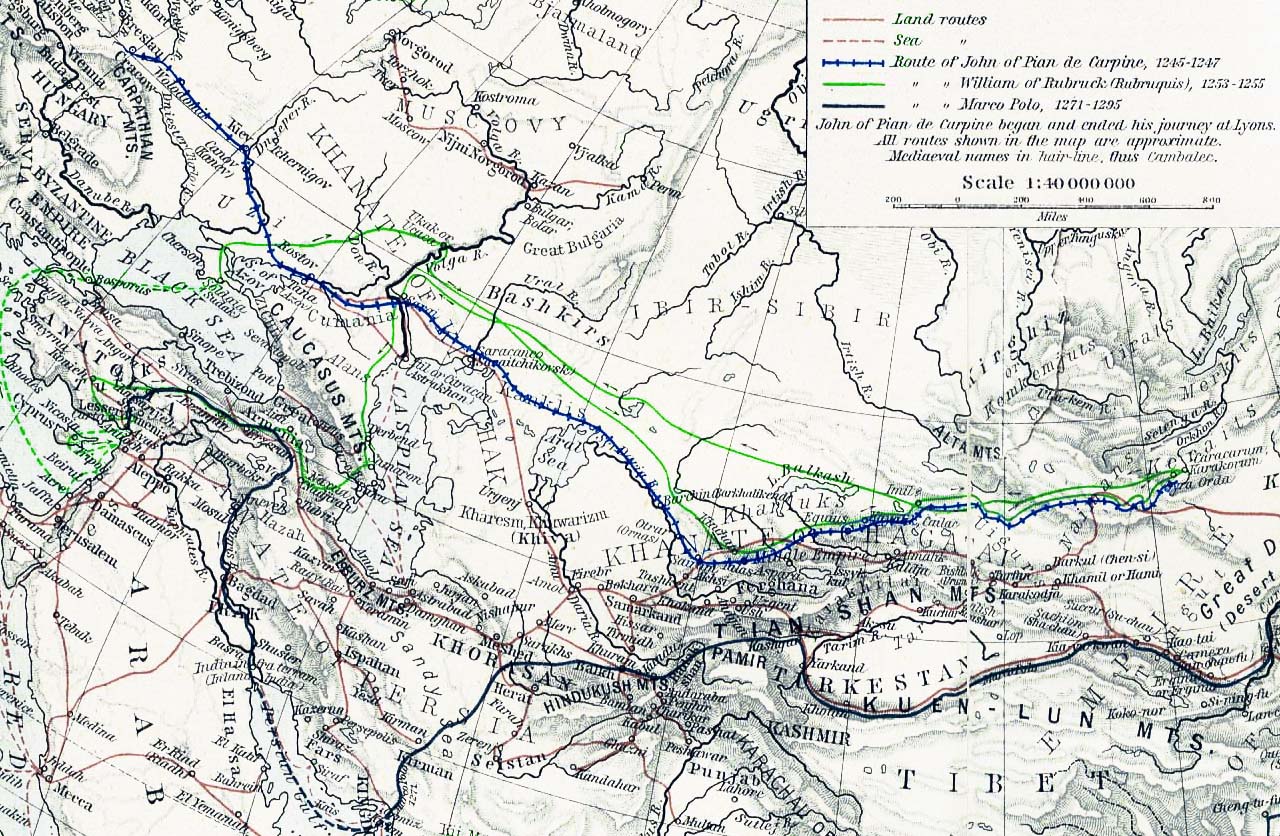
- ▪Route: Bohemia, Kiev, Volga, Central Asia
- ▪Recorded tents, tactics, relay riders
Transcript
Ada:That man was John of Plano Carpini. Not some fresh-faced adventurer—contemporaries describe him as heavyset, experienced, a senior Franciscan chosen for endurance and discipline.
Theo:An old, heavy friar riding thousands of miles across Asia. That's not the hero I pictured.
Ada:That's exactly why he was picked. He set out in spring twelve forty-five, joined later by Benedict the Pole, and they pushed through Bohemia, Kiev, the Volga region, and deep into Central Asia.
Theo:How long did that take?
Ada:Roughly a year and a half of cold, hunger, and rules they didn't understand. Visitors could be made to wait outside a ruler's camp, follow strict gift customs, pass between fires for purification.
Theo:And Carpini's writing all this down.
Ada:Obsessively. Horses, felt tents, fermented mare's milk, how the army was organized in tens and hundreds and thousands. And the thing that frightened him most—the speed of Mongol communication.
Theo:The relay riders.
Ada:News crossing the empire faster than anyone in Europe thought possible. To a diplomat, that's terrifying.
Theo:And after all those months, the camp finally comes into view.

1246 CE
Enthronement of a Great Khan
- ▪1246: Güyük enthroned near Karakorum
- ▪Envoys from across Eurasia attended
- ▪Court multilingual, religiously diverse
- ▪Christianity implied no exclusive loyalty
Transcript
Ada:They arrived in twelve forty-six at an extraordinary moment—the enthronement of Güyük Khan, grandson of Genghis, the empire's third Great Khan.
Theo:So they walked into a coronation, not just an audience.
Ada:A coronation drawing envoys from across all of Eurasia. Picture it: thousands of tents, princes, tribute, delegations from lands Europe barely knew existed.
Theo:Two exhausted friars in that crowd. They must have felt like nothing.
Ada:And here's what surprised Carpini most. Güyük's court was multilingual and religiously mixed—Christian advisers, Muslim, Buddhist, all present, all consulted.
Theo:Wait, Christians were already at the khan's court? So the pope's whole pitch wasn't even news.
Ada:Right, and it landed in a world where being Christian didn't mean exclusive loyalty. You could serve the khan and keep your faith. The papal message assumed a choice that simply didn't apply.
Theo:So Rome's spiritual leverage evaporates the moment the letter's read aloud.
Ada:Essentially. Carpini offered a warning and an invitation. Güyük heard a subject who hadn't yet submitted.
Theo:And now it's the khan's turn to write back.
1246 CE
Güyük's Letter
- ▪Dated November 1246, sealed by the khan
- ▪Demands the pope and kings submit in person
- ▪Frames conquest as the will of Heaven
Transcript
Ada:So the friars have witnessed the enthronement, and now Güyük gives them what they came for: a letter. Dated November twelve forty-six, sealed with the khan's own seal.
Theo:And I'm guessing it isn't a polite thank-you for the pope's spiritual advice.
Ada:Not remotely. The core demand is submission. The pope and every king of Europe must come in person to Karakorum and acknowledge Mongol authority. Come, and pay homage.
Theo:In person. He wants the pope to travel across a continent to bow.
Ada:That's the message. And the reasoning is theological in its own way. Güyük frames Mongol conquest as the will of Heaven, of eternal Tengri. If God favored Rome, he asks, why has He handed the world to us?
Theo:That's a sharp comeback to a letter that opened by scolding him.
Ada:It surviving in Persian with Turkic elements, and a later Latin version smooths some of it with Christian vocabulary. Historians warn: that translation is not a transparent transcript.
Theo:So the document itself now sets out west, carrying a demand far heavier than Innocent ever expected.
1247 CE
Historia Mongalorum
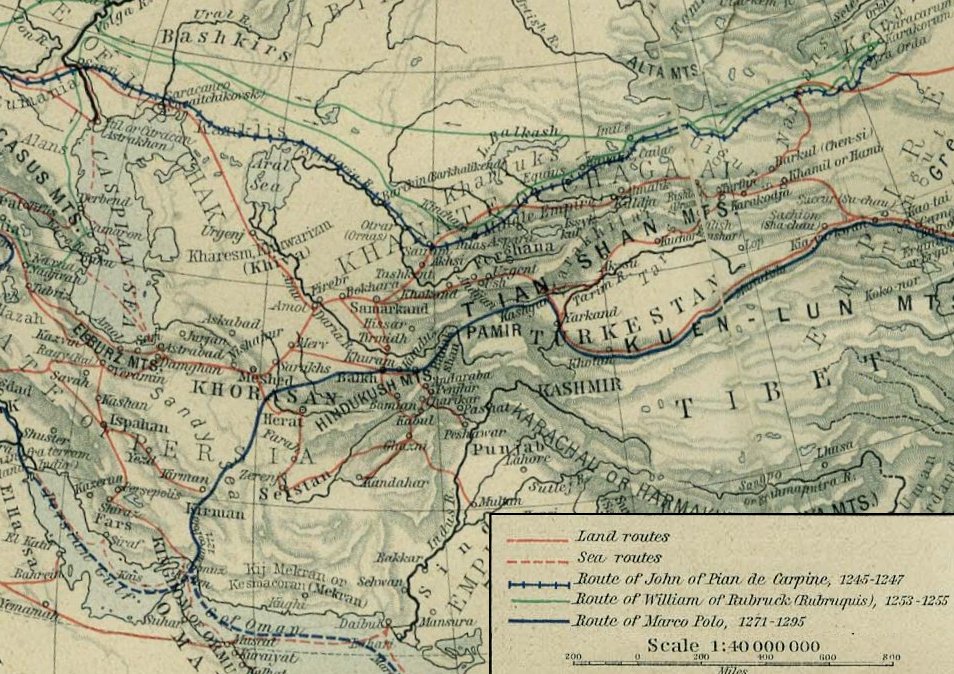
- ▪Carpini returns to Lyon in 1247
- ▪First detailed European report on Mongol armies
- ▪No secure record of a private papal consultation
Transcript
Ada:Carpini gets home in twelve forty-seven, and he brings back two things. The letter, and something arguably more useful: a report. The Historia Mongalorum.
Theo:So instead of rumor and panic, Innocent finally has hard information.
Ada:Exactly. Carpini describes their troop structure, how a commander of ten sits under a commander of a hundred, of a thousand, of ten thousand. Their weapons, their horses, their roads, their signaling.
Theo:That's basically a military intelligence dossier. Did anyone in Europe have anything close?
Ada:Nothing this detailed. He noted their terrifying speed of communication, the felt tents, the fermented mare's milk, the way envoys were made to wait and follow strict ritual before an audience.
Theo:And what does the pope actually do with the letter? Do we have the scene, Innocent and an adviser hunched over it?
Ada:Honestly, no. No surviving source securely records a private conversation between Innocent and any named adviser about the document. That famous consultation is best treated as a reasonable reconstruction, not a transcript.
Theo:Still, the report gives him a working picture of how the Mongols actually fight.

1248 CE
An Empire Without an Answer
- ▪Güyük dies in 1248, no western campaign follows
- ▪Exchange yields no conversion, no alliance
- ▪Rome's lasting gain: intelligence, not diplomacy
Transcript
Ada:Now here's the twist of timing. The demand said: submit, come, or face us. And then in twelve forty-eight, Güyük dies. Before any great western campaign can follow through on the threat.
Theo:So the warning that terrified Europe just… evaporated?
Ada:The immediate danger eased, yes. The exchange produced no conversion, no alliance, no submission. On paper it failed completely, in both directions.
Theo:And yet you keep hinting it mattered anyway.
Ada:Because Rome sent a letter expecting to instruct the khan, as a spiritual superior admonishing a distant ruler. The reply forced the pope to confront a power that simply did not recognize his authority at all.
Theo:That's the real collision. Two men each convinced Heaven was on their side, talking straight past each other.
Ada:And out of that misunderstanding came one of medieval Europe's first genuine intelligence reports on the Mongols. A stubborn, heavyset friar riding eight thousand miles to bring home the truth.
Theo:I love that the lasting legacy wasn't the diplomacy. It was the observation, one man refusing to look away and writing it all down.
Ada:That's what history often keeps: not the deal that failed, but the person who paid attention.
Theo:And remember, you can interrupt any episode of ours to ask a question. We're right here.
Ada:This was Historai — where history answers back.
Want one about anything?
Historai writes an episode like this on any moment, invention, or figure you pick — and you can interrupt it mid-play to ask questions.
Create your free accountGenerated with Historai — AI history podcasts, tailored to the listener.