Historai · shared episode
Three Scripts, One Japanese Language
Why does Japanese still use Chinese characters alongside two homegrown syllabaries? The answer begins with Buddhist texts and court politics, then winds through women’s literature, schoolroom reform, and the surprising survival of an apparently impossible system.

1946 CE
The List That Saved the Kanji
- ▪1946: Tōyō kanji list of 1,850 characters
- ▪Modern kana spelling replaces historical usage
- ▪Abolitionists wanted kana or Latin — both lost
- ▪Standardization, not simplification, won
Transcript
Ada:November nineteen forty-six. Japan is occupied, exhausted, rebuilding from ash. And in the middle of all that, the government publishes a list. Not of war criminals or ration allowances — a list of characters. One thousand eight hundred and fifty of them, and everything not on it was, in effect, discouraged from public writing.
Theo:Wait — in the middle of national catastrophe, someone's ranking which written characters you're allowed to use?
Ada:Exactly. It was called the Tōyō kanji list, and it came with modernized spelling rules for the kana syllabaries too. I'm Ada.
Theo:And I'm Theo. Welcome to Historai. Today, why one language ended up carrying three separate scripts at once — and why a system everyone kept calling impossible refused to die.
Ada:Because that's the twist. Reformers said the thousands of Chinese characters were choking mass literacy. Some wanted to scrap them entirely — write Japanese purely in kana.
Theo:Or just switch to the Latin alphabet, I'd guess. Clean slate.
Ada:There were serious voices for exactly that. Neither won. Instead of being abolished, the system got standardized — trimmed, tidied, and locked in.
Theo:So the thing accused of being too complicated survived by getting a little less complicated. That's almost cheeky.
Ada:It's the whole story in miniature. But to see why anyone thought Japanese writing was such a burden, we have to go back to the day writing itself first showed up on Japanese shores.

5th–7th c. CE
Writing Arrives from Abroad
- ▪Chinese characters reach Japan via Korea by the 5th century
- ▪Bundled with Buddhism, law, and statecraft
- ▪Classical Chinese didn't match spoken Japanese grammar
Transcript
Ada:So here's the strange starting point: as far as we know, the Japanese had no writing of their own. None. Then Chinese characters arrive, probably by the fifth century, coming across through contacts with the Korean peninsula.
Theo:And they don't come alone, I'm guessing.
Ada:Not even close. They arrive bundled with Buddhism, diplomacy, law, statecraft—the whole apparatus of a serious state. Writing was a tool of power before it was a tool of poetry.
Theo:But Chinese and Japanese aren't even related languages, are they?
Ada:Completely different families. So the earliest official texts were written in Classical Chinese—a language most people around the court didn't actually speak.
Theo:Wait, so they imported a writing system for a language that wasn't theirs?
Ada:Exactly. Chinese characters could carry meaning beautifully. But Japanese grammar needs little endings and particles—markers of who did what to whom—and Chinese simply doesn't supply those.
Theo:So they had the letters but not the glue that holds a Japanese sentence together.
Ada:Perfectly put. And solving that puzzle meant bending the characters into doing something they were never designed to do.

Nara period, c. 759
Man'yōgana: Characters as Sound
- ▪Chinese characters used for sound, not meaning
- ▪Preserved in the Man'yōshū (c. 759)
- ▪One syllable could have many spellings—huge memory load
Transcript
Ada:So scribes came up with a clever workaround. By the seventh and eighth centuries, they started using Chinese characters purely for their sounds, ignoring the meaning entirely. We call it man'yōgana.
Theo:So a character that means 'mountain' in Chinese might just be borrowed for the noise it makes?
Ada:Precisely. You pick characters like beads on a string, one per syllable, spelling out Japanese words phonetically. It's named after the Man'yōshū, the great poetry anthology traditionally dated to around seven fifty-nine.
Theo:That must have made for some intense-looking pages.
Ada:Wonderfully dense. And here's the catch—a single Japanese syllable could be written with several different characters. There was no fixed choice.
Theo:So the same word could look different every time? That sounds like a memorization nightmare.
Ada:It was. You had to know hundreds of complex characters just to spell out sounds you already knew how to say. Elegant, but exhausting.
Theo:A bridge, then—not a home.
Ada:Beautifully said. And someone was bound to look at those elaborate pages and think: there has to be a faster way.
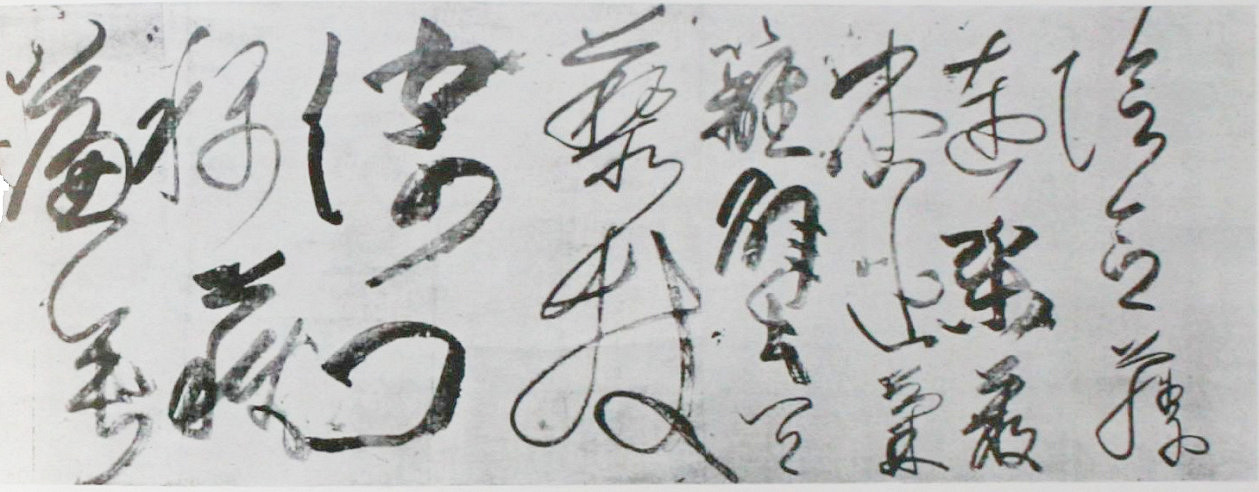
Early Heian, 9th–10th c.
Hiragana and Katakana Emerge
- ▪Hiragana: cursive, simplified man'yōgana forms
- ▪Katakana: fragments of characters, first as reading aids
- ▪Developed gradually, 9th–10th centuries
- ▪Hiragana linked to 'women's hand' at court
Transcript
Ada:The faster way arrived as two shortcuts, both born from man'yōgana. First, hiragana—which grew from writing those phonetic characters in flowing, cursive brushstrokes until they simplified into rounded little signs.
Theo:So hiragana is basically man'yōgana in a hurry.
Ada:That's a lovely way to put it. And katakana came from the opposite instinct—instead of blurring the whole character, you snip off just a fragment of it. A corner, a piece.
Theo:Why chop them up like that?
Ada:They started as reading aids. Monks studying dense Buddhist texts scribbled these compact markers between the lines to remind themselves how to read the Chinese. Efficiency for scholars.
Theo:And neither was invented in a single flash, I assume.
Ada:No single inventor, no eureka moment. Both developed gradually across the ninth and tenth centuries. But a social divide grew up around them.
Theo:What kind of divide?
Ada:Hiragana's rounded hand got associated at court with onna-de—'women's hand'—while katakana and formal Chinese belonged to male clerical and scholarly worlds. Not a rule about who could read, but a matter of custom and taste.
Theo:And that women's hand was about to produce something extraordinary.

c. 1000 CE
The Tale of Genji
- ▪Murasaki Shikibu wrote largely in kana, c. 1000 CE
- ▪Often called the world's first novel
- ▪Handwriting signaled taste and status
- ▪Ishiyamadera moonlight origin is legend
Transcript
Ada:So by around the year one thousand, kana isn't just a shortcut anymore. It's the engine of an entire literary explosion at the Heian court.
Theo:This is where The Tale of Genji comes in, right? I keep hearing it called the first novel.
Ada:That's the one. Murasaki Shikibu, a court noblewoman, wrote it largely in kana. It's often called the world's first novel, though honestly that label is a modern convenience — a way of saying it's astonishingly ambitious for its time.
Theo:And she's writing in the so-called women's hand, the flowing script?
Ada:Right — hiragana was linked at court with onna-de, women's hand. But be careful: that was a social association, not a rule about who could physically read what. Men wrote kana too.
Theo:There's a story about her starting Genji by moonlight at a temple, isn't there?
Ada:At Ishiyamadera, yes — lovely image, but treat it as legend, not fact. What's real is the intimacy of this writing: poems and letters brushed vertically on scented paper, where your handwriting itself broadcast your taste and breeding.
Theo:So the script that started as a crib note became a mark of sophistication. That climb kept going, didn't it?

1600–1900 CE
Standardizing the Kana
- ▪Kanji for roots, hiragana for grammar, katakana for annotation
- ▪Edo printing widened access to reading
- ▪1900 reforms fixed one shape per kana
- ▪Retired many competing variant forms
Transcript
Ada:Over the next several centuries, the three-way division we know today settled into place: kanji for lexical roots and borrowed vocabulary, hiragana for grammar and native words, katakana for annotation and specialized uses.
Theo:And everyone just agreed on that balance?
Ada:Not at all. Buddhist temples, government offices, merchants, warriors, popular fiction writers — each struck the balance differently. It was less a rulebook than a set of overlapping habits.
Theo:Didn't Edo-period printing sort some of this out? Mass-produced books, wider readership?
Ada:Printing did expand access enormously. But handwritten cursive stayed genuinely hard to read, and — here's the part that surprises people — there wasn't one settled shape for each kana.
Theo:Wait, so a single sound could be written with several different cursive characters, even then?
Ada:Exactly. Dozens of variant forms floated around in ordinary writing. Then in nineteen hundred, school reforms picked one standard shape for each kana and quietly retired the rest.
Theo:So mass schooling did what the court never bothered to — imposed a single form on everyone.
Ada:That's the pivot. Standardization moved from the brush into the classroom, and that made modern mass literacy possible.
Theo:Which sets up the twentieth century's real fight — whether to keep this three-script system at all.

1868–2010 CE
Three Scripts, One Language
- ▪Meiji genbun itchi closed the speech-writing gap
- ▪1946 reforms, then Jōyō kanji: 2,136 by 2010
- ▪Abolition of kanji never won out
- ▪Digital input made thousands of characters retrievable
Transcript
Ada:By the Meiji era, writers were pushing genbun itchi — bringing written Japanese closer to how people actually spoke. That gap between formal script and living speech was finally closing.
Theo:And then the postwar reforms we opened with — nineteen forty-six.
Ada:Right. Modern kana usage, and a limited list of everyday kanji. Later came the Jōyō list of nineteen eighty-one, revised in twenty-ten to two thousand one hundred and thirty-six characters.
Theo:So the abolitionists lost. The people who wanted just kana, or the Latin alphabet — none of them won.
Ada:None of them. The system repeatedly declared too complicated didn't disappear. It survived by getting more standardized — and then something ironic happened.
Theo:Let me guess. Computers.
Ada:Computers. Digital input didn't kill kanji — it rescued them. You type the sounds, and the machine offers you thousands of characters you'd never reliably write by hand.
Theo:So the burden that reformers hated — memorizing all those characters — got quietly outsourced to the keyboard.
Ada:That's exactly it. The script once condemned as too heavy for ordinary people now survives partly because machines remember what human hands no longer have to.
Theo:When you lay it all out — Chinese characters arriving with Buddhism, scribes forcing them to spell out sounds, women's cursive becoming great literature — it's the story of a language refusing to pick just one tool.
Ada:That's the takeaway for me. Writing systems aren't designed clean and handed down; they accumulate, layer on layer, and people keep what works. Japanese kept all three because each one earned its place.
Theo:And if any of this sparked a question, remember you can interrupt us any time and just ask — that's what we're here for.
Ada:This was Historai — where history answers back.
Want one about anything?
Historai writes an episode like this on any moment, invention, or figure you pick — and you can interrupt it mid-play to ask questions.
Create your free accountGenerated with Historai — AI history podcasts, tailored to the listener.